The Back Pain Mechanism Most People Never Learn About
I'd never met Dr. John Sarno. But his remarkable theory helped me heal my back pain when nothing else worked.


In 2017, back pain ruled my life.
I was disabled by constant pain in my lower back and down my left leg.
I spent months going to doctors, chiropractors, physiotherapists, and others, but no one could help.
An MRI showed two herniated discs. Surgery seemed like the only option left.
Then a friend told me about a doctor at the Rusk Institute in New York with a theory that was hard to believe at first.
Dr. John Sarno said my pain was real and physical, but it wasn’t coming from my discs.
It was coming from reduced blood flow.
The Autonomic Nervous System
The autonomic nervous system automatically controls your heart rate, digestion, blood vessels, and other bodily functions without you being aware.
Sarno believed this system could restrict blood flow to certain muscles and nerves in the back, causing mild oxygen deprivation.
Even a small amount of oxygen deprivation could cause spasm, tingling, numbness, and severe pain in the glutes, back, neck, and shoulders. If it affected a nerve, the pain could radiate down the arms or legs.
He called this condition Tension Myositis Syndrome, or TMS.
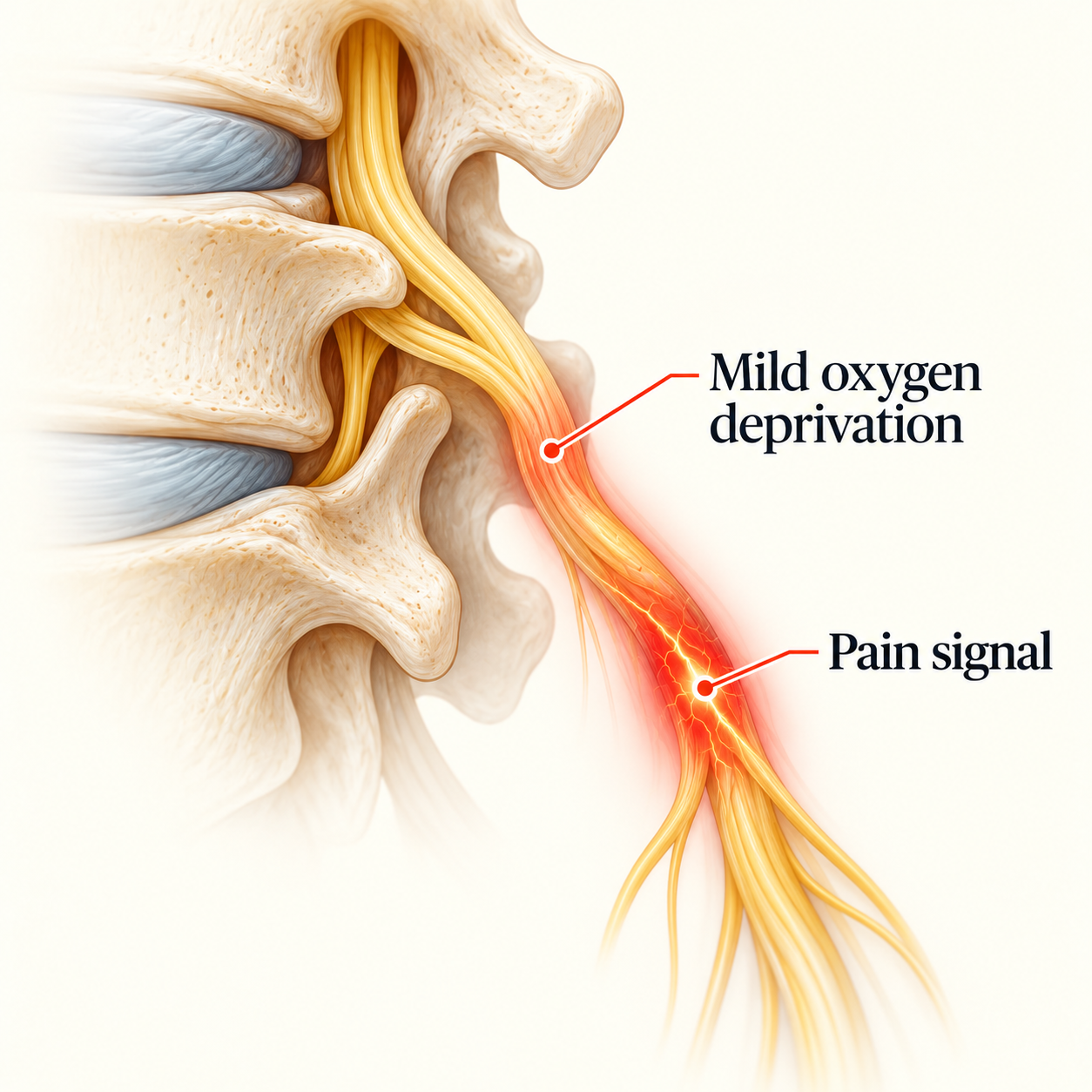
- Why it moves around. Blood flow can be reduced in one spot and then another, so the pain moves in a way an injury can’t.
- Why it comes and goes. Blood vessels constrict and relax all day long, so the pain can switch on and off in a way real damage can’t.
- Why scans don’t match the pain. Oxygen deprivation doesn’t show up on an MRI (and herniated discs show up in many people with no pain at all).
- Why people recover with no lasting damage. Once normal blood flow returns, the tissue is fine, because nothing was ever really broken.
Dr. Sarno treated thousands of patients for TMS and the results he reported were remarkable.
In one follow-up survey of 109 patients with confirmed herniated discs, 88% said they were essentially pain-free. Another 10% reported improvement.
In other words, 98% got better.
For the first time, my pain made sense. It wasn’t damage. It was something that could be reversed.But one question still bothered me. Why would my own nervous system cut off blood flow to my back?
Why Would Your Nervous System Do This?
When you’re nervous, your hands go cold. When you’re embarrassed, your face turns red. When you’re anxious, your stomach ties itself in knots.
That’s your autonomic nervous system moving blood around in response to emotion, automatically, without asking your permission.
Sarno believed the same thing happens in the back. But the emotions driving it are ones you may not even know you have.
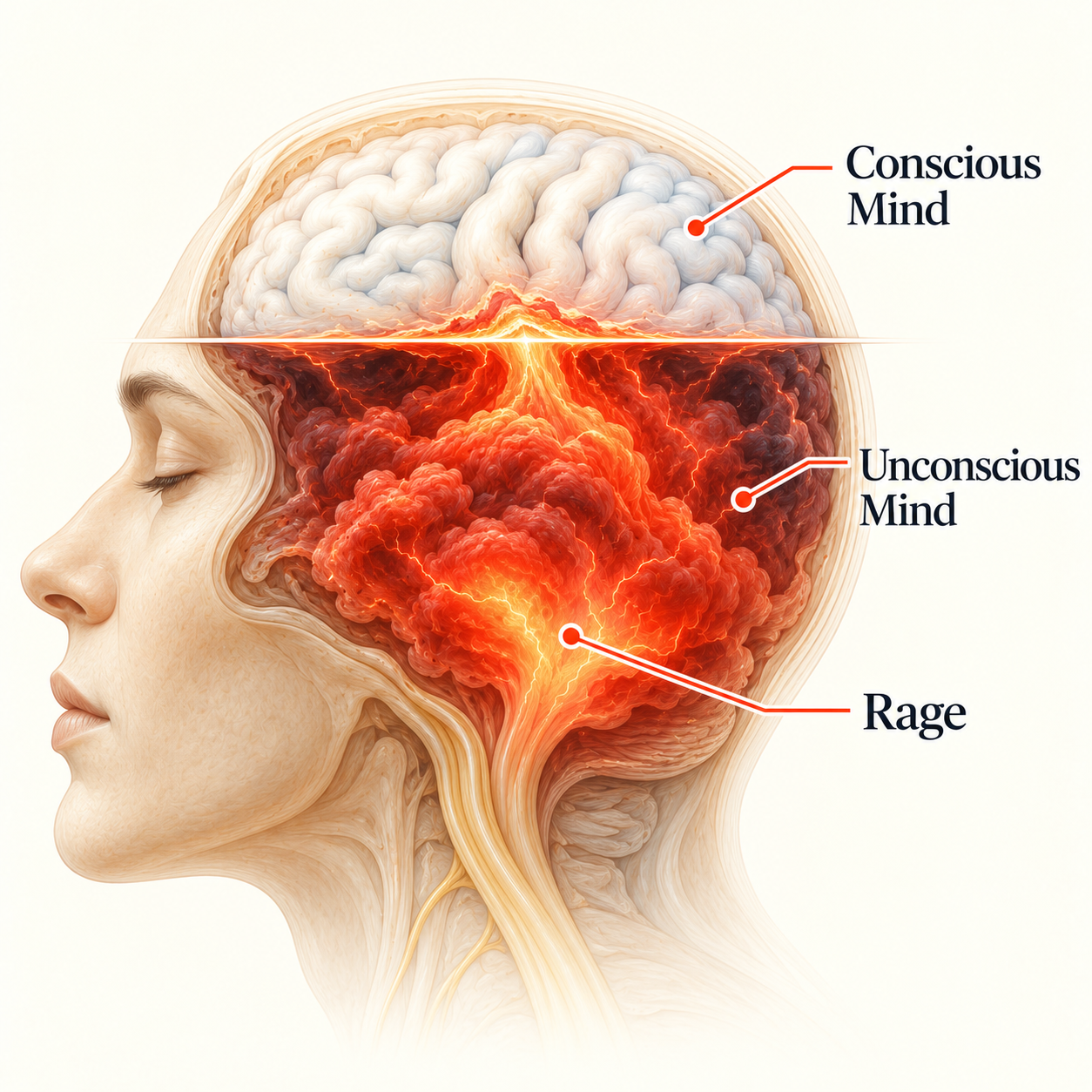
Beneath our conscious awareness lies what psychologists call the unconscious mind, a vast store of thoughts, memories, and feelings we know little about.
Sarno believed uncomfortable emotions accumulate there: anger, fear, resentment, shame, frustration. Some come from childhood or traumatic events. Most come from the ordinary pressures of everyday life.
He called these repressed feelings rage.
When that happens, Sarno believed the mind creates a distraction to keep it buried.
A powerful distraction: physical pain.
When your back is killing you, it’s all you think about. Your discs, your posture, your next appointment, whether you’ll ever exercise again. The pain consumes your attention, and the emotions stay out of sight.
But there was one more detail that convinced me to take this seriously.
Sarno noticed that certain personality traits were especially common among his patients. When I read about them, I had the uncanny feeling he was describing me.
Do You Recognize Yourself Here?
Do You Recognize Yourself Here?
Sarno noticed that many of his patients were:
- Perfectionists
- People-pleasers
- Conscientious
- Responsible
- Hardworking
TMS especially strikes people who put enormous pressure on themselves. People who try to do everything right, keep everyone happy, and rarely give themselves permission to be angry.
Sound familiar?
It certainly did to me. And then something remarkable happened.
My back pain began to disappear.
I hadn’t fixed my herniated discs. I hadn’t had surgery. I’d simply understood what was really happening, and my nervous system seemed to stand down.
Next, I wanted to know what I could actually do to help that process along. So I researched everything I could find about Sarno’s work and the doctors, psychologists, and researchers who built on it.
Nine years later, it gives me joy to share what I’ve learned.
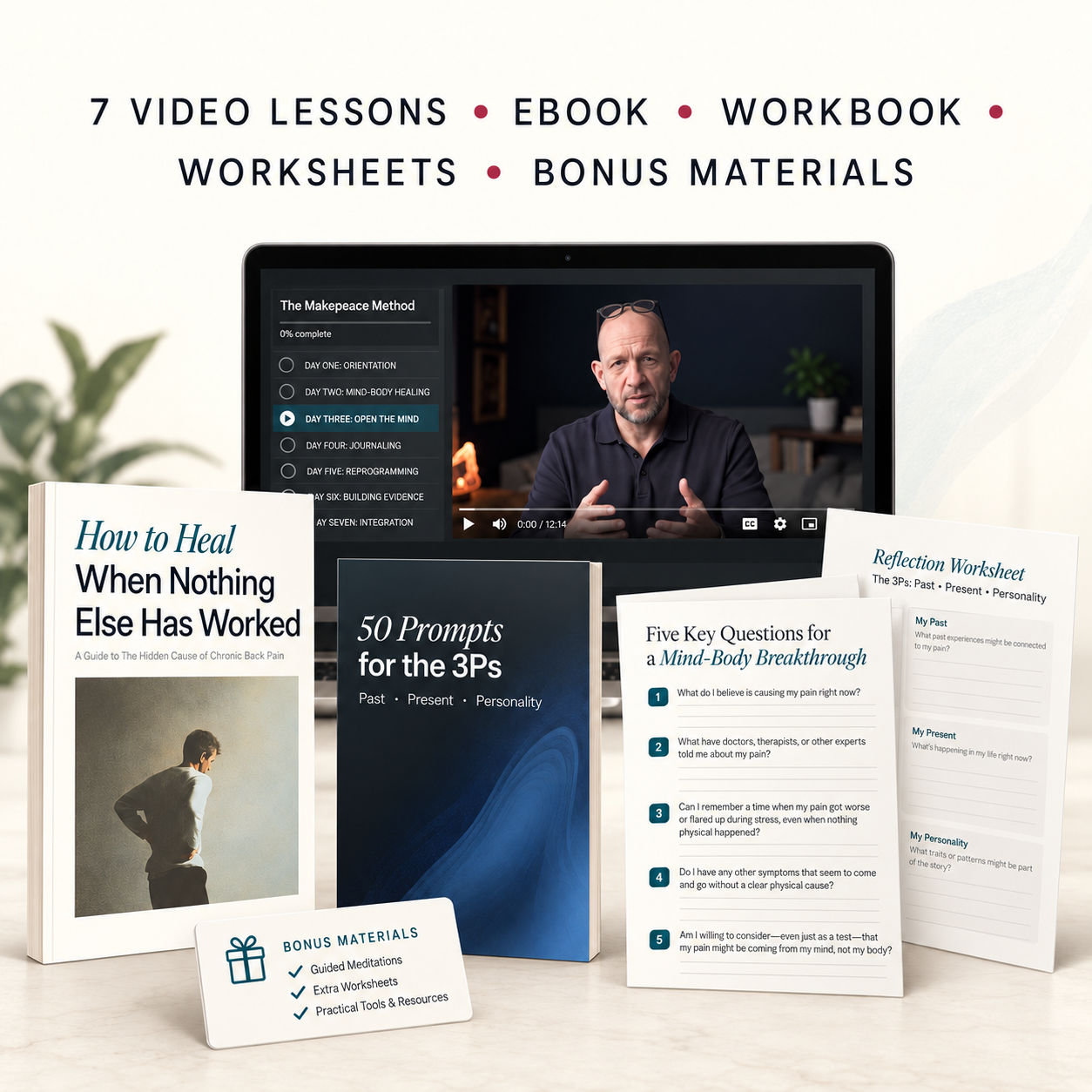
This program is what I wish someone had given me when I felt hopeless.
Through seven video lessons, an ebook, and practical tools, it turns Sarno’s theory into simple steps that take less than 30 minutes a day.
Some people notice a difference quickly. Others need more time and practice.
Try it for yourself with the safety of a money-back guarantee.
Whatever you decide, I sincerely wish you well.
If you do the work and don't feel better, email me for a full refund.

This course is for educational purposes only. It is not a substitute for professional medical advice, diagnosis, or treatment. If you are experiencing severe or unexplained symptoms, consult a qualified healthcare professional to rule out any serious medical conditions before applying the techniques described in this course. The author assumes no responsibility for the use or misuse of the information provided.
© 2026 by Makepeace all rights reserved